IN WITH LOVE

Updated: Jun 3, 2025
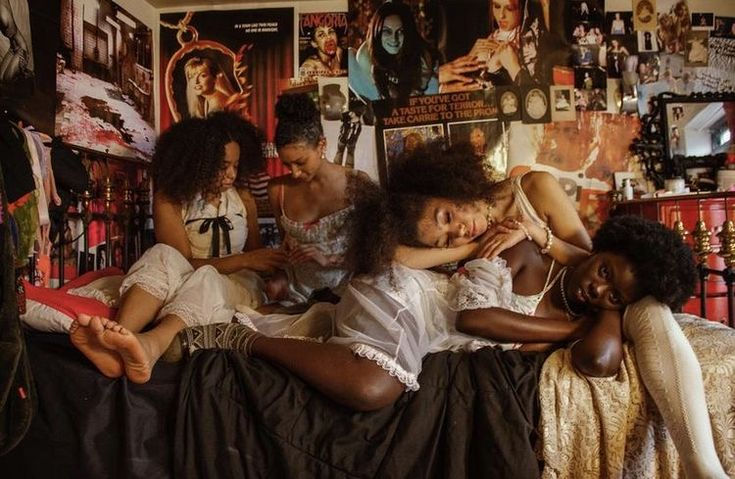
Image credit: Pinterest
When you don't have a community/system that offers or affords you soft landing or the grace to not be strong, you can't afford not to be strong because you're all you've got, and you don't want to slip and risk losing you too.
"I found the world to be woefully lacking in safe spaces. So I became one."
- J. Warren Welch Women
The other day, I visited a pastor's home. He had lost his wife, and since my family has known him for a long time, we stopped by to "pay our respects", and some may even think to offer comfort— I am some. Interestingly, things went differently than I expected. We arrived at this Pastor's home, and upon receiving us, he began to rain down inspired words of comfort and reassurance. I got sadder instantly because that's who I am: "Omg! Why does he feel so much he has to be or show up strong for us or anyone?" Feelings aside, I believe it's easy logic— a person loses someone/thing precious to them and feels down as a result. They need to be extended comfort and grace, not (expected to) give comfort. They (should) get comfort because they're the one who's heartbroken and/or feeling whatever ache of loss and sadness they associate their pain with. So, to be in the position where we think we must make it up to people because they've watched us lose something as precious as our life partner seems like the worst thing in the world.
Something seeming like the logical order doesn't necessarily make it our reality. There probably are ten thousand and more reasons why this may be. In this case, my first thoughts are with direct regards to the bereaved himself— he feels he needs to show up strong and/or that people expect him to. This implies that "even though he doesn't have to, he feels he has to. But how valid is this assumption that he doesn't have to? If he doesn't have to and nobody expects him to, is this just him placing unrealistic, burdensome responsibilities on himself? But what if he indeed has to? What if people certainly expect him to show up this way? What if he shows up this way in his knowledge that people expect this of him and thus offer him no genuine soft landing besides their social responsibility of showing up and extending condolences? In which case, taking on this act, this performance of strength and having it together, isn't just for others (:because they expect him to), but also for himself. When you don't have a community/system that offers or affords you soft landing or the grace to not be strong, you can't afford not to be strong because you're all you've got, and you don't want to slip and risk losing you too.
Those of us who would like to encourage this man to break in the face of his loss may as well recognize/accept that keeping it together may be his way of coping where he sees no other way, acknowledging that it's a privilege that we can afford to break in the face of our own hardships.
ON OTHER ACCOUNTS..
Significant to take into consideration is that this may be a man who has for all his life lived amid masculinity that encourages unwavering strength, endurance, and cool-hard aloofness; masculinity that paints any (inward or outward) sign and expression of emotional distress (aside anger and rage) as signs of weakness. Not just any man, this one is also a pastor from whom most (if not all) expect grit and strength, especially during the "test of time"— because of his (supposed) proximity to God.
This means, in addition to being worried about how people would view him if he turned out to be a man with the emotional capacity to break, he is also apprehensive about what people would think and say about the validity of his call and faith if they saw him broken. I am a Christian. I grew up and nearly lived in the church. So although I would want to interject that "Never mind that. He doesn't have to worry that we will question him as a man and man of faith because we know he's human and he's allowed to be sad and break", that's not the truth of how that world works. I can confirm that if these are his fears, he's justified because, indeed, many would question his faith, pronounce him unfit for man, and even more unfit for a pastor and spiritual leader appointed by God. (church) Christians play a crucial role in upholding and maintaining patriarchal masculinity which encourages lovelessness and lack of healthy vulnerability in males. For a religion based on a book that emphasizes love so much, plainly stating that "God is Love" and noting love as our most significant concern wherein it is greater than faith, hope, and every other commandment, it is surprising that our communities are characterized by the manner of contempt, judgment, and bitterness they're characterized by.
___
And I wonder, which parts of you grieve your losses and which parts grieve over people whose hearts leave your grief without home. When the world is asleep, I wonder how much of the night you spend wiping tears that flow for yourself and how much of it you spend wiping tears that flow because you're surrounded by hearts that don't truly see yours. And I wonder, which portion of your pillow is dampened with sweat and tears over the miseries of this lifetime and which portion over people who can't take care of your heart?
[Where does your grief lay to rest? Are there hearts that hold space for yours? Does your heart have space to hold another's?]
___
It must be that in order for people to be soft landings for us, we must let them. If we are incapable of letting them, we have a problem. To build communities where we can be easy landings for each other, we must be able to love, let love, give love, and receive love.
At the end of the day, whether we show up physically for people or not, if we can't show up for them spiritually, we're not doing much to help them. In the case of this Pastor, I believe we failed to show up for him in the true sense of it because although we were there and present, many barriers kept us from being able to fully reach out to him, provide him with a place of understanding, love, and rest. I don't pin this unfortunate ordeal on any one person but on the reality that this is simply waters that may have never been tested— he's never sought spiritual/loving refuge in us; we've never offered to provide him with more than we thought he needed, and so in hard times, on both sides, the unsureness wins. In which case, even though we might have failed to provide a true place for him to lay his grief to rest, it doesn't mean we don't love him— we do, and that's why we showed up. But love does, and love does more. Love does internal and external. If love is not doing and doing more, internally and externally, is its existence thus nullified? If love actively doesn't do and do more, how can we prove love is?
One would argue that we showed up in our love for him and can't do much beyond that. That his internal comfort is really up to him because we can't get on the inside of others and fix them up, comfort or heal them. That others have to allow us in if we're to be there for them in that manner. All of these are truths. I am fond of saying we can't be there for people if they don't let us. Sometimes I think some of my screws are terribly loose for what might appear as the urge I feel to fix people up on the inside. Still, I know that, in reality, that's not my hope or desire at all. I know that I am simply bothered when I extend myself, do in love, and find that the person I have done that for was left untouched, unaffected, and unmoved. I feel deeply concerned that our showing up for a person we love would not at all help or comfort them because I'm stuck on the thought that there must be serious cause for this. Not on one side but on both sides— on ours and that of those we love. I think there's a reason why a person we're showing up for is unable to receive us or let us help them— again, this reason may stem from our end, theirs, and most crucially, from both.
It is equally important to be able to love as it is to be able to receive love. The inability to do one undermines the value of the other. Love and let love. In being able to receive love, we give others the permission to love us. If we cannot receive love, we render the loving efforts of those who love us (or are at least trying to) useless.
In trying to learn love, I've come to understand it goes far beyond being loving. Being loving while surrounded by people who are unreceptive to your love yields little to no results, often creating dysfunctional and unhealthy love systems. It is as essential to be able to give love as it is to be able to accept and receive love. By insisting on being unreceptive to the love of others, we turn them away; we discourage them from being loving; we turn away from love and lessen our chances at nurturing communities where we are each other's soft landings.
If a healthy love system is one in which we nurture our own and the people we love spiritual growth (M. Scott Peck), we're not truly engaging in love healthily when we want to nurture others while neglecting our own nurture-ment or when we nurture others' but refuse to let them nurture us. Although emphasis is popularly put on the importance to be loving, receiving love is equally just as big an issue to creating healthy love systems and communities. Most people, especially those consistently offering loving care, often do not know how to receive love when they are on the receiving end. And though some may argue it's rare, I've come to find that (some) people, those who recognize that the ability to receive love is equally important as the ability to give love when building healthy love systems, get uncomfortable to a point where they no longer want to take/receive love from where they're not allowed to give, where their loving offerings are turned away. When we go about love this way, we force these people into a place of reciprocal refusal, where they no longer want to receive love from us.
Our inability to receive love comes from someplace. It may come from being wounded in places where we should have known love, but we can't insist upon it; we must create strategies to work our way out and away from this cycle of neglect and abandonment. Refusal to accept and receive loving comfort and support from the people in our lives indicates a lack of trust. And although our issues with trust are justified, stemming from relevant betrayal and abandonment, we must be open to the prospect of confronting our pain of abandonment and loss because when we are stuck here, we're stuck without trust, and "without trust, there can be no genuine intimacy and love" (bell hooks).
This is how we check into this year. I thought this would be a great piece to share now, at the beginning of the year, when most of us are in reflection and planning mode. Who knows, somebody might get inspired and set the intention to be more loving and receptive to love.
Before you leave, let me know what you think regarding the subject(s) of the piece— What is your POV?!
May 2024 bring you grand wonders. Love always, Tea.🤎



You write so artistically. Thank you! I do happen to be one of those who result to "reciprocal refusal" when my "love offerings" are repeatedly rejected.